


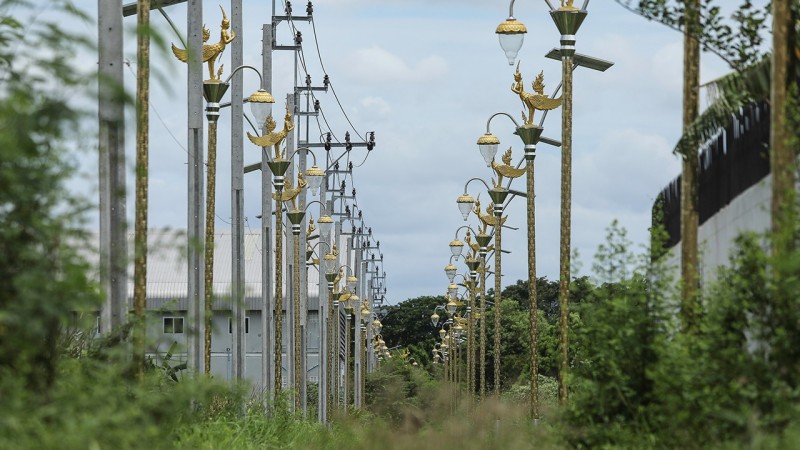
BANGKOK — A parliamentary committee has raised concerns that Thailand's Thai Innovation List—a government procurement program designed to promote domestically developed innovations—is failing to achieve its intended goals, with procurement spending concentrated on street lighting products while innovative medicines and medical devices remain largely absent from public hospitals.
The concerns emerged during a meeting of the House Committee on Economic Development in June 2026, which reviewed progress in promoting emerging industries through the procurement scheme. Committee spokesperson Karanic Chantada disclosed the discussion on July 7.
Representatives from the National Science and Technology Development Agency (NSTDA) told lawmakers that more than 910 products are currently registered under the Thai Innovation List, including 492 medical products, making healthcare the program's largest category. Registered innovations are eligible for preferential government procurement for up to eight years, provided they meet research, ownership, quality, and regulatory requirements.
NSTDA also confirmed that responsibility for managing the program will be transferred to the National Innovation Agency on October 1, 2026, while NSTDA will continue supporting entrepreneurs in a technical advisory role.
Meanwhile, the Comptroller General's Department acknowledged recurring procurement risks involving registered innovation products, particularly street lighting poles and lamp systems used in construction projects. Officials said they have repeatedly warned government agencies not to draft procurement specifications that restrict competition, including requirements favoring specific distributors or innovation registrations.
Private-sector representatives from Thailand's medical device industry argued that the system has become ineffective for healthcare innovators. They said pricing rules often force companies to accept permanently low government reference prices, discouraging participation despite successful registration.
Industry representatives also reported that many public hospitals are reluctant to purchase innovative medical products through the program's direct procurement mechanism because officials fear additional scrutiny or investigations by oversight agencies. As a result, some registered products have never been purchased despite being eligible under the scheme.
Lawmakers were told that only around 40% of registered innovation products have ever been procured, while the remaining 60% have yet to secure a single government purchase.
Committee members questioned why procurement spending appears heavily concentrated in products such as street lighting poles, whose innovative value has been debated, while high-potential products—including medicines and medical devices—continue to struggle to enter the public healthcare market.
The committee also warned that specifying innovation registration codes directly in procurement documents could limit competition and potentially lead to "lock specification" practices.
At the conclusion of the meeting, lawmakers called for a comprehensive review of the entire Thai Innovation List system. Recommendations included establishing a lead agency responsible for policy-level monitoring and evaluation, developing a clearer national innovation strategy, and revising registration rules, incentive structures, and procurement mechanisms to ensure the program genuinely supports innovation rather than concentrating spending on a narrow range of products.
www.facebook.com/tcijthai
Tags


