

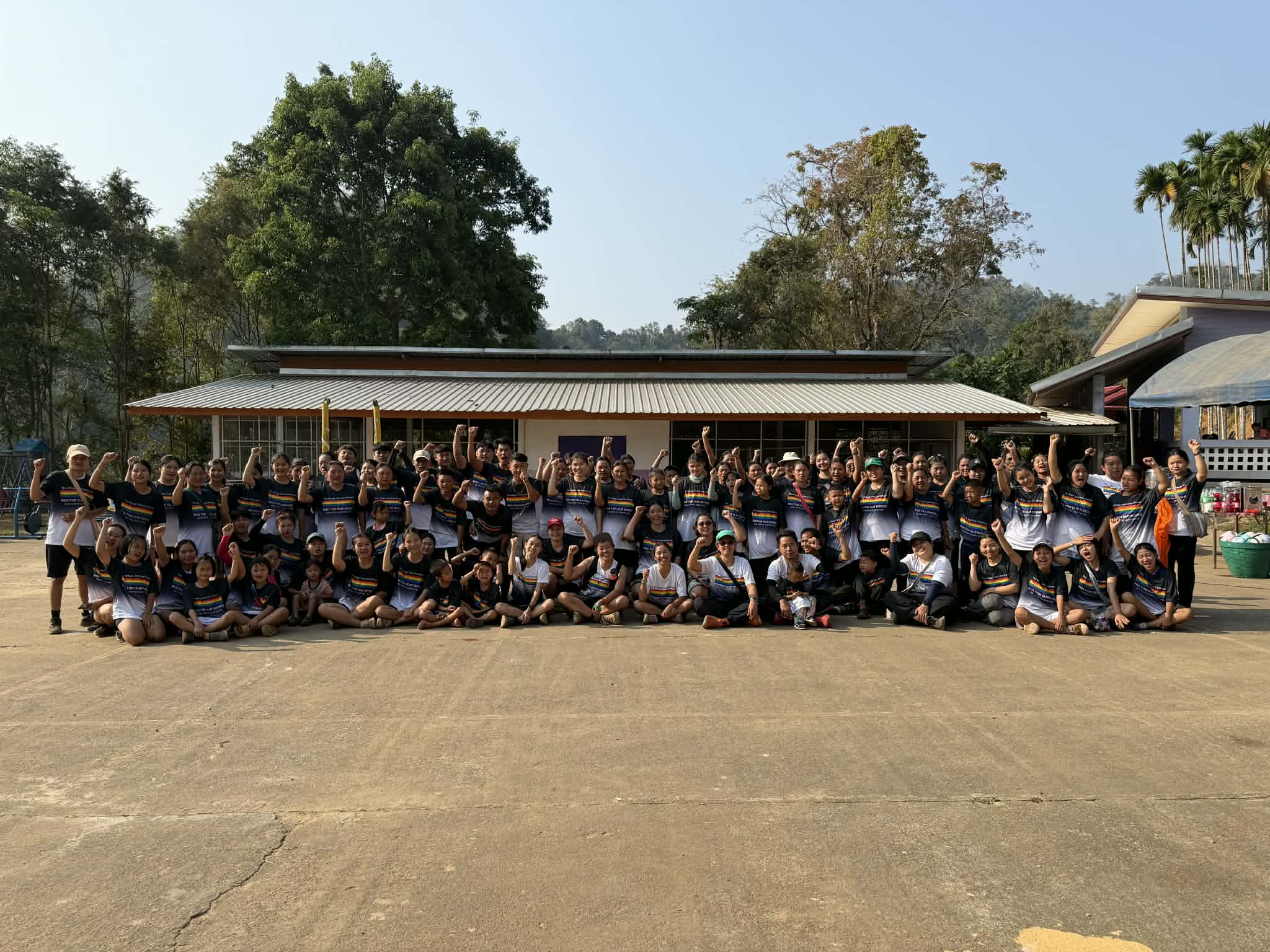
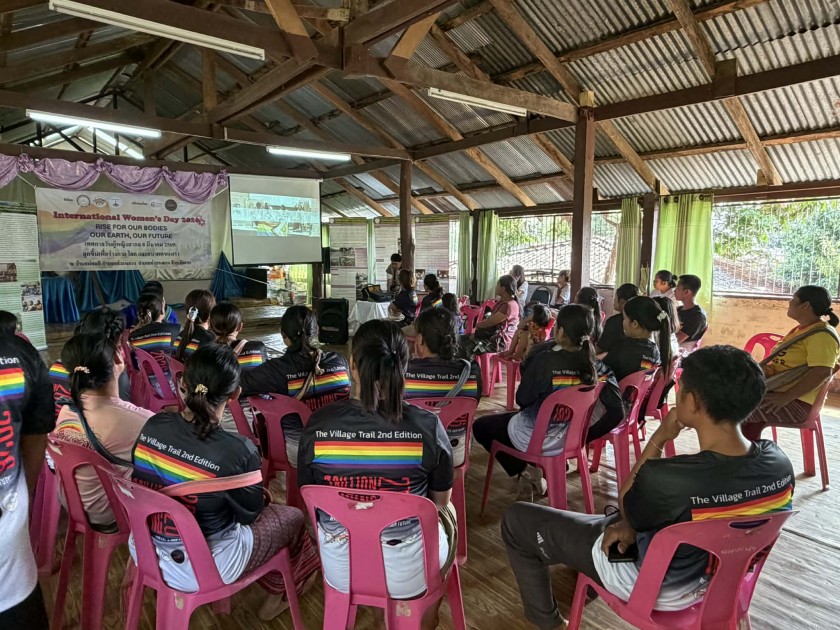
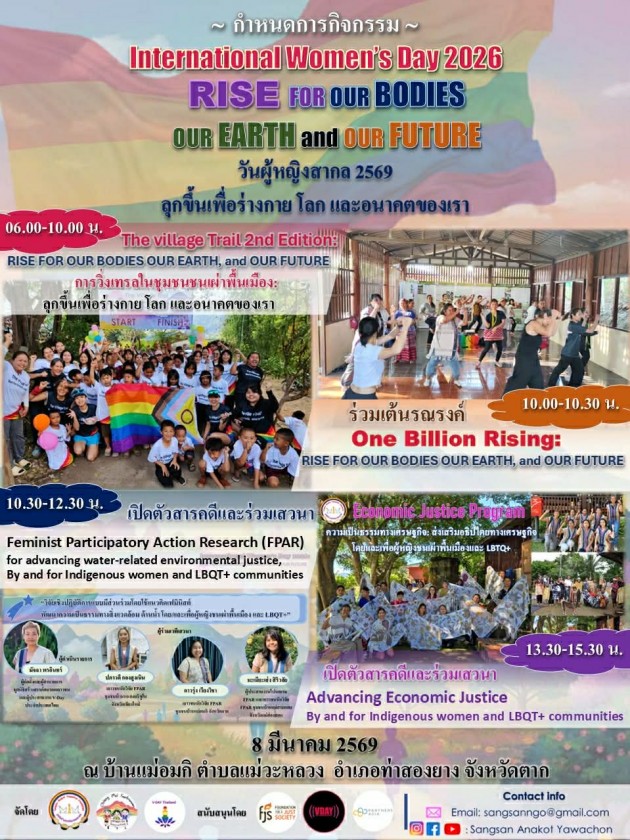
The Sangsan Anakot Yawachon Foundation, together with a team of LBQT+ Indigenous women trail runners and walkers/ Chiang Mai Frontrunners, and V-Day Thailand, in collaboration with Indigenous women youth leaders from Mae Omki Village, the Mae Wa Luang Subdistrict Administrative Organization, Ban Mae Omki School, and the Mae Wa Luang Subdistrict Health Promoting Hospital. With support from Foundation for a Just Society, Partners Asia, and V-Day, we organized the ‘International Women’s Day 2026: Rise for Our Bodies, Our Earth, and Our Future’ more than a celebration, the event established a safe, collective space for Indigenous women, children, and LBQT+ to empower and claim our essential roles in shaping our own bodies, our futures, our communities, and the world we inhabit.
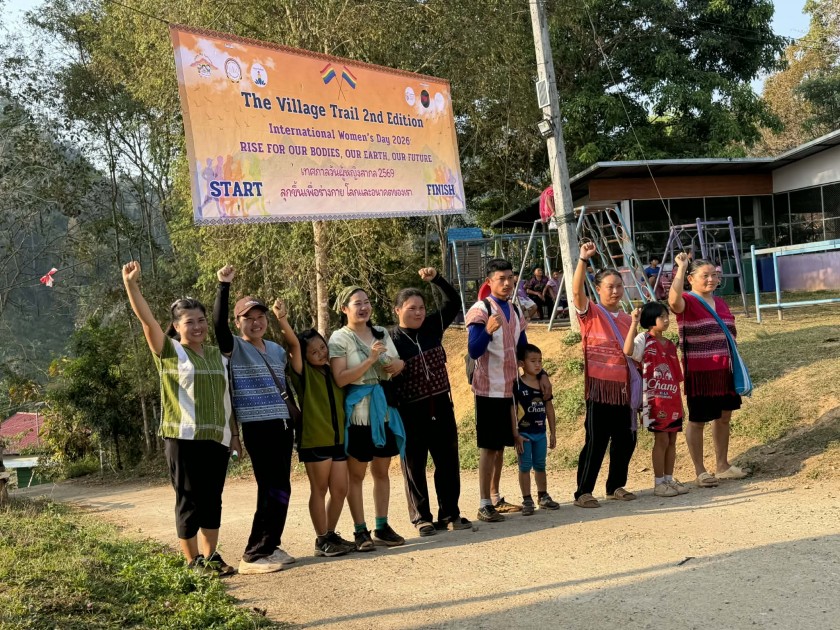
The Village Trail 2nd Edition: Rise for Our Bodies, Our Earth, and Our Future
At 6:00 AM, the event began with opening remarks from representatives of all key partners:
- Daoroong Weingwichcha, Indigenous Women Youth Leader, Representative of Mae Omki Village
- Matcha Phorn-in, Representative of Sangsan Anakot Yawachon Foundation
- Panupong Maemeisobchoke, Representative of Ban Mae Omki School
- Rathanon Thannamdecha, Representative of Mae Wa Luang Subdistrict Administrative Organization
- Suwadee Namrinchuenchitsai, Representative of Mae Wa Luang Subdistrict Health Promoting Hospital
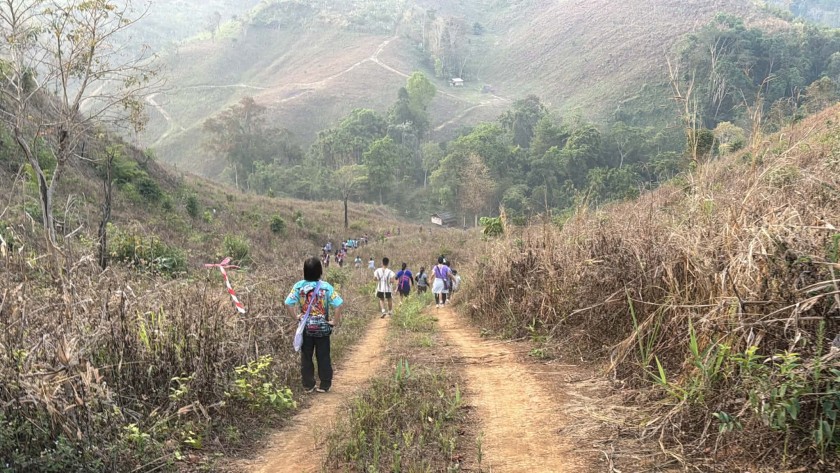
Following the opening, the event commenced with a trail run through the ancestral lands of Mae Omki Village. Titled ‘The Village Trail 2nd Edition: Rise for Our Bodies, Our Earth, and Our Future,’ this initiative is part of a movement that has grown steadily for three consecutive years. As a trail run truly by and for Indigenous women, children, and LBQT+, this year saw nearly 200 participants bring their diverse identities to the community’s trails. As they moved through mountains, rivers, and forests, the trail run transcended sport to become a social movement, powerfully connecting the bodies of women, children, and LBQT+ with the lands and natural resources we protect.
This movement stands as a declaration that both women’s bodies and the Earth must be protected, nurtured, and defended as one. We must never be discriminated against, violated, threatened, controlled, or oppressed by any power.
Over the past three years, The Village Trail has evolved into a vital platform for a movement dedicated to gender equality and the inclusion of LGBTIQAN+. We use trail running as a strategic tool to:
- Advocate for human and Indigenous rights, centering those who identify as women, children, and LBQT+ individuals.
- Create safe spaces for collective care and holistic wellbeing.
- Advance environmental and climate justice by honoring the relationship between the indigenous people and our ancestral lands and territories.
- Affirming Self-Determination and Free, Prior, and Informed Consent (FPIC): Ensuring meaningful participation and community-led consultation for all activities involving Indigenous peoples, our ancestral lands, and our territories.
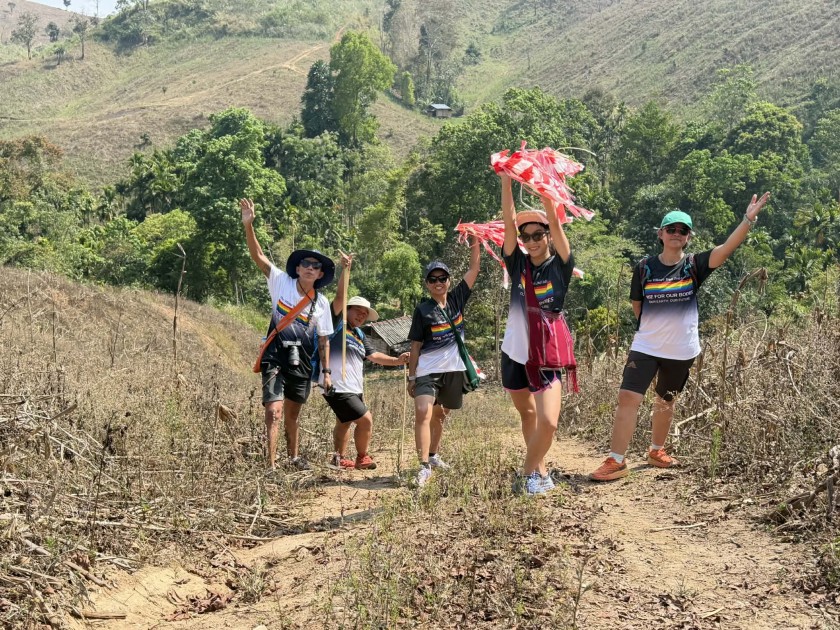
The theme of each year reflects the evolving journey of struggle, resilience, and hope shared by Indigenous women, children, and LBQT+:
- 2024 – The Village Trail Zero Edition: Run for Gender Justice
- Location: Tiyaper Village, Sob Moei Subdistrict, Sob Moei District, Mae Hong Son.
- 2025 – The Village Trail First Edition: Run for Environmental Justice
- Location: Nong Krizu Nai Village, Bo Kaeo Subdistrict, Samoeng District, Chiang Mai.
- 2026 – The Village Trail Second Edition: Rise for Our Bodies, Our Earth, Our Future
- Location: Mae Omki Village, Mae Wa Luang Subdistrict, Tha Song Yang District, Tak Province."
Core Principles of The Village Trail
- Community Ownership & Leadership: Organized by and for Indigenous women, children, and LBQT+ individuals. Indigenous communities lead and own the event on our ancestral lands and territories.
- Self-Determination & FPIC: Guided by the principles of Self-Determination and Free, Prior, and Informed Consent (FPIC) to ensure communities hold full decision-making power over their lands and resources.
- Ecological Stewardship: Committed to protecting our lands, rivers, and natural resources while advancing Environmental and Climate Justice.
- Gender & Social Justice: Actively opposing patriarchy and gender-based violence, while promoting Gender Justice and the full inclusion of LGBTIQA+ people.
- Safety & Accountability: Maintaining a strict Anti-Sexual Harassment environment to ensure the safety of all participants.
- Economic Justice: Advocating for economic equity, specifically for those who identify as Indigenous women and LBQT+ individuals.
- Collective Wellbeing: Building a culture rooted in collective care, holistic wellness, and solidarity.
“These principles reflect a core belief that the struggle for women’s rights, children’s rights, LGBTIQAN+ rights, and Indigenous rights cannot be separated from the struggle for land right, environmental and climate justice, and the future of the planet.”
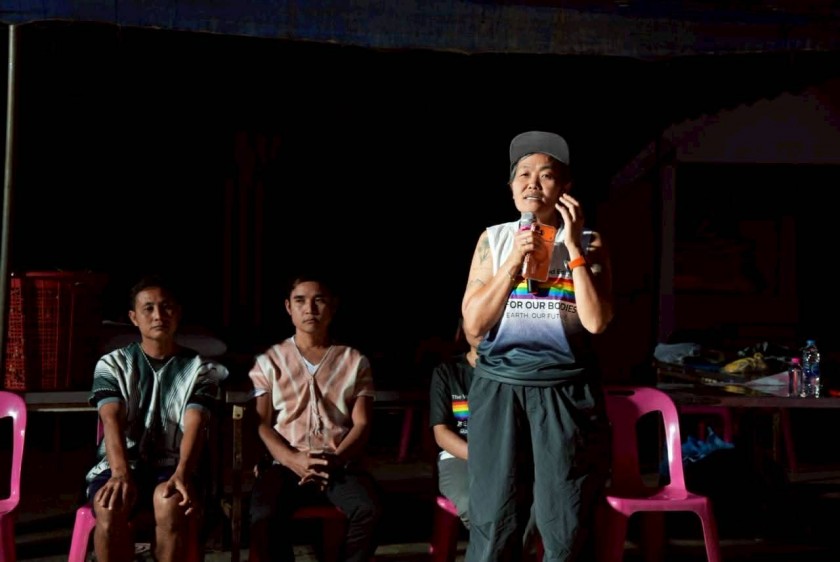
One Billion Rising Global Movement: Women, Children and LBQT+ from indigenous communities included Mae Omki Village and Pang Thong Villages are rising for OUR BODIES, OUR EARTH, OUR FUTURE
(Link of One Billion Rising VDO: https://youtu.be/asc5jnWmzdM)
Following the conclusion of The Village Trail, more than 30 participants from Mae Omki and Pang Thong Villages joined the One Billion Rising global movement, organized by V-Day Thailand. For over a decade, this movement has mobilized socail movement for gender justice and aims to ending violence agaist women, children and LGBTIQAN+.
In Thailand, V-Day was established by Matcha Phorn-in, who serves as the founder and national coordinator. In 2026, the global movement and this local event share a same theme: Rise for Our Bodies, Our Earth, and Our Future.
To the powerful song “Break the Chain” Indigenous women, children, and LBQT+ rose and danced together. This collective dance sends a strong message to the world
“Our bodies are sacred spaces, just as our Earth is a sacred home. We are all born free and equal in dignity and rights; these must be respected and protected from all forms of discrimination and violence. We rise to reclaim our bodies, to heal our Earth, and to restorative justice and sovereign future for all.”
When Indigenous Women and LBQT+ Telling Our Own Stories: A Narrative Change
Another important highlight of the event was the launch of two documentary projects:
- A documentary from the Feminist Participatory Action Research (FPAR) on advancing environmental justice - water, by and for Indigenous women and LBQT+.
- A documentary on Advancing Economic Justice by and for Indigenous women and LBQT+.
Link of the Documentary film on The Economic Justice Program: Nurturing Economic Autonomy by and for Indigenous Women and LBQT+ : https://youtu.be/a-l5vZ7mC8Q
After screened those 2 documentaries the it followed by Panel Discussion in order to created space for LBQT+ indigenous researchers youth leaders to tell their own stories through research, data collection, analysis, and knowledge creation grounded in community experiences.
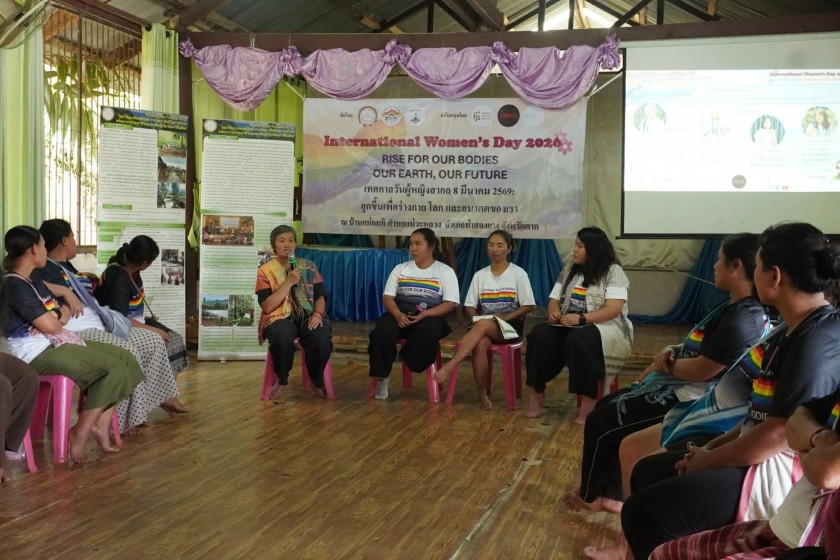
The discussions were moderated by:
Matcha Porn-in
Founder and Director of the Sangsan Anakot Yawachon Foundation
Speakers included:
- Paphawadee Kongsungnoen
FPAR Youth Researcher, Nong Krizu Nai Community, Chiang Mai
- Daorung Wiangwicha
FPAR Youth Researcher, Mae Omki Community, Tak
- Mameaseang Siriwalai
FPAR Program Coordinator and Youth Researcher, Mae Sam Laep Community, Mae Hong Son
The research and documentaries highlighted:
- Economic crises in Indigenous communities
- Challenges in accessing water resources
- Environmental crises including water scarcity, recurring floods, and heavy-metal contamination in the Salween River
- Policy solutions and advocacy led by Indigenous women and LBQT+ community members
More than 30 participants joined the dialogue, exchanging knowledge, experiences, and policy proposals to pursue:
- Gender justice
- Social justice
- Environmental justice
- Economic justice
Demands from Indigenous Women and LBQT+:
This year’s International Women’s Day event in Mae Omki Village was not just a celebration, it was a declaration of intention by Indigenous women and LBQT+ to the world.
We are rising to reclaim:
- Sovereignty over their bodies, identities, and gender expressions
- Land rights and equitable access to natural resources
- Environmental justice, including the right to clean water as a fundamental public service
We call for:
- An end to dam projects on the Salween River
- An end to the Yuam Water Diversion Project
- An end to rare earth mining in Myanmar, which is causing heavy-metal contamination in the Salween, Sai, Kok rivers
We further affirm the urgent need to:
- Protect and restore Indigenous ways of life
- Develop economic rooted in gender justice, Indigenous culture, livelihoods, and natural resources.
- End land grabbing
- End war, especially in Myanmar and build peace
“When Indigenous women and LBQT+ people rise for OUR BODIES, OUR EARTH, and OUR FUTURE, the world must stand with us. This is not just our fight; it is a struggle for the survival of our only planet”
www.facebook.com/tcijthai
Tags


