


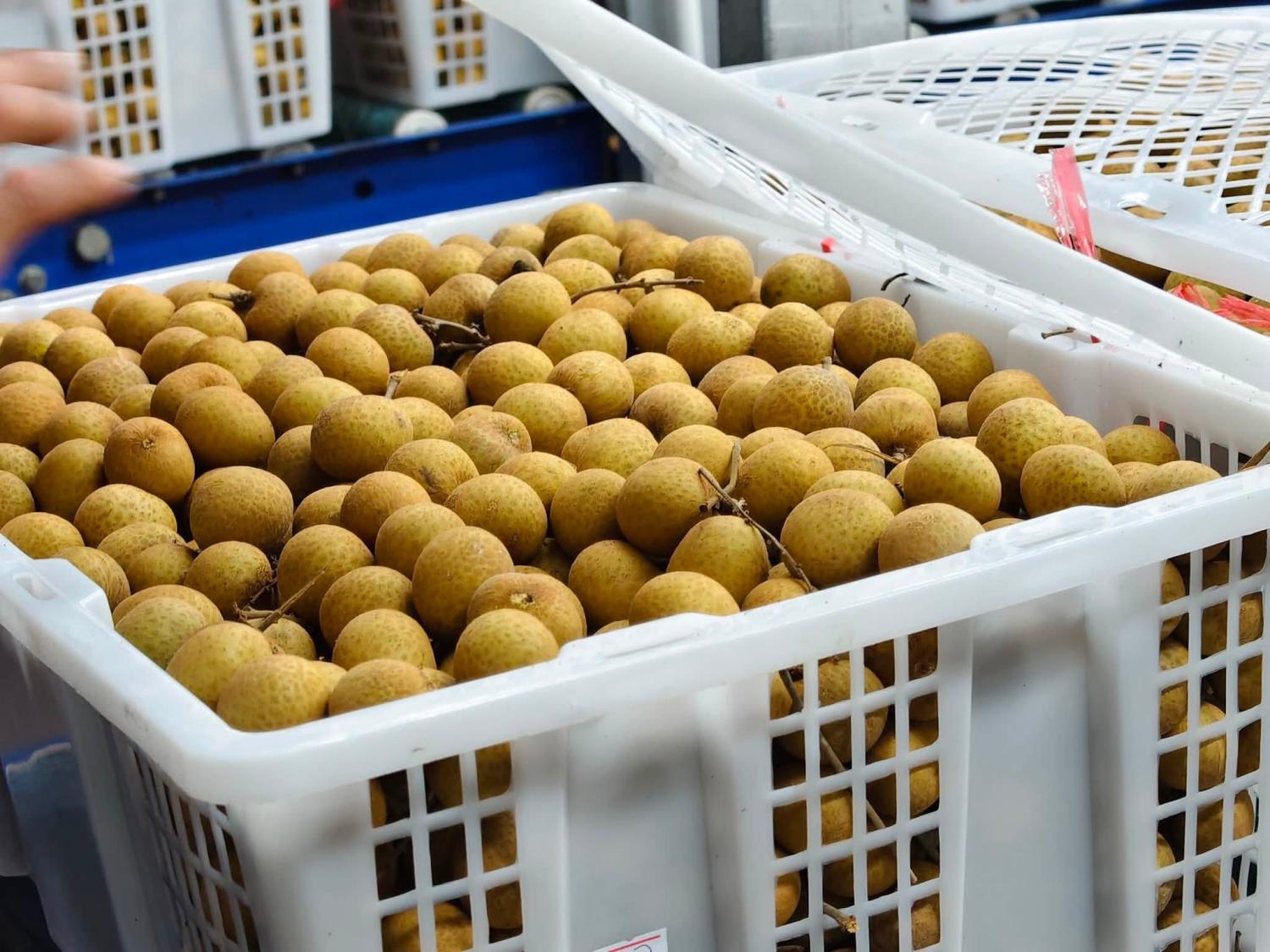
Chiang Mai, Thailand – Longan growers in northern Thailand are being asked to invest in next year's harvest without knowing whether their fruit will be allowed into China, their biggest market, an opposition lawmaker has warned.
Karanic Chantada, a member of parliament for Chiang Mai from the People's Party, called on the government on Thursday to explain urgently what testing standards importing countries now apply for sulphur dioxide residue, and what support farmers can expect if shipments are rejected again.
Her appeal came two days after Thai PBS reported that Thailand's Department of Agriculture had inspected 16 longan packing houses in the eastern province of Chanthaburi, covering 30 shipping containers, after two containers were sent back by the destination country for exceeding sulphur dioxide limits.
Most of the packing houses closed while inspectors were on site, leaving some farmers with no one to sell to. The Department of Internal Trade has stepped in to buy and redistribute 40,000 tonnes of fruit from Chanthaburi and the north. Farm-gate prices have fallen to an average of just 16 to 17 baht (roughly $0.50) a kilogram – and only about 30 percent of this year's estimated 700,000-tonne off-season crop has reached the market so far.
'Farmers are hurt the most'
Karanic, who is vice-chair of a parliamentary subcommittee studying export supply chains, said the rejections were not new but part of a problem that has never been fixed.
According to figures presented to the subcommittee by Thailand's National Bureau of Agricultural Commodity and Food Standards (ACFS), China's customs authority, the General Administration of Customs (GACC), issued alerts on or returned 180 containers of fresh Thai longan between July 14, 2025 and March 13, 2026. The cases involved 136 producers and 70 exporters.
"Every time a container is rejected, the people who suffer most are not the packing houses, but the farmers, because the packers immediately stop buying or push prices down," Karanic said.
"This year, of the more than 60 licensed longan packing houses in the north, fewer than 10 have dared to buy for export, because they are not confident their fruit will pass Chinese inspection. If a shipment is detained or destroyed at the destination, the loss can reach about one million baht [nearly $30,000] per container."
Her biggest worry, she said, is the 2027 growing season. Farmers must already start spending on fertiliser, pesticides and tree care, and many borrow to do so. Yet they still have no clear answers on what the rules will be, whether packers will return to buying for export, or what safeguards exist if the problem recurs.
"Farmers have to decide whether to invest in a new crop without knowing whether they will be able to sell it, or at what price," she said. "This is a risk that should not fall on farmers alone. The state must provide clarity before the new season begins, not scramble to fix things after the harvest is in."
Behind the rejections
After hearing from government agencies and visiting Chiang Mai and neighbouring Lamphun province, the subcommittee identified four main causes.
First, China changed how it tests the fruit. Instead of checking only the flesh, inspectors now test the whole fruit – skin, flesh and seed together – against a limit of 50 parts per million. Thai authorities were only formally notified in August 2025. Because traditional fumigation leaves most of the residue in the skin, fruit treated the old way now fails easily.
Second, conventional fumigation uses large amounts of sulphur dioxide, because it was designed to stop fungus during long journeys rather than to pass a whole-fruit test. If the gas is not properly vented afterwards, residue levels stay too high.
Third, post-harvest handling falls short. Wet fruit absorbs several times more of the chemical, yet longan is still often carried in open trucks in the heat and can take two to three days to reach cold storage.
Fourth, the state lacks the staff and money to monitor the trade. The ACFS has only 12 officers nationwide with the power to seize goods. Thailand's agricultural affairs office in Beijing, which is responsible for tracking changes in Chinese regulations, has had its budget cut by half to 1.4 million baht (about $40,000) a year and has just one or two permanent staff.
"This problem should not be blamed on packers or farmers alone," Karanic said. "The state found out late, couldn't keep up with the new rules, and didn't prepare small players with the knowledge and tools to adapt. As long as we don't test at the source using the same method as the importing country, we will only find out when the goods reach the border – and by then it's too late."
Six demands
Karanic set out six measures she wants the government to take before the 2027 season:
1. Clear guidance before farmers invest: The agriculture and commerce ministries should publicly explain the importing countries' testing criteria, the state of negotiations with China, and plans for purchasing and support next season.
2. Training for farmers: Agriculture agencies should reach growers through district and sub-district officers and farmer groups, explaining in plain language how to use chemicals correctly, how to harvest and keep fruit dry, and what trading partners now require – before the season starts, not after problems arise.
3. Permanent testing at the source: Longan should be checked before export using the same method as the destination country, in both the east and the north, rather than only after rejections.
4. Technology for small operators: Cooperatives, community enterprises and small Thai-owned packers should receive subsidies for low-chemical fumigation methods – such as a technique developed at Maejo University that cuts sulphur use by up to two-thirds – along with cold storage close to farms.
5. More staff and funding for monitoring: The ACFS should hire more inspectors, and the Beijing agricultural office's budget should be restored so Thailand learns of rule changes early and can pass the information on to farmers quickly.
6. Protecting farmers and consumers: The Department of Internal Trade should stop packers from using the residue issue as an excuse to cut prices or halt purchases, and open buying channels in the north. Rejected fruit must be tightly controlled and kept out of the domestic market, she said, because Thais commonly crack longan skins with their teeth and could be exposed to the chemical directly.
Chiang Mai is Thailand's largest longan-growing province, with more than 440,000 rai (about 70,000 hectares) under cultivation, and many households depend on the fruit for their income all year.
"If the state keeps responding with ad hoc inspections, this crisis will come back every season," Karanic said. "The government needs to invest at the source – in knowledge, technology and people – and give farmers clarity now, before they put their money into the 2027 season."
www.facebook.com/tcijthai
Tags


